




Why Coffee Tastes Sour and How to Fix It

A sharp, puckering first sip can stop a good morning in its tracks. If you are wondering why coffee tastes sour, the answer is usually not that your beans are bad. More often, your coffee has not had enough opportunity to release its natural sweetness, depth, and structure into the cup.
Sourness is one of coffee's most useful signals. It tells you something about the bean, the roast, the water, or the brew method. Read that signal correctly, make one precise adjustment, and a thin, tart cup can become balanced and satisfying.
Why Coffee Tastes Sour: Acidity vs. Underextraction
Coffee naturally contains acids. That is not a flaw. A bright washed Ethiopian may taste like lemon tea, while a fruit-forward natural coffee can suggest berries or stone fruit. In the right cup, acidity brings energy, clarity, and dimension. It makes coffee taste alive rather than flat.
Sour coffee is different. It is abrupt, sharp, and often short-lived. Think under-ripe citrus, plain yogurt, or a sip that makes the sides of your tongue tense up. It may have a watery body and little sweetness behind it. That profile usually points to underextraction.
Extraction is the controlled process of dissolving flavor from ground coffee into water. Early in the brew, acids dissolve readily. Then come sugars and rounded flavors. Later, heavier, drier, and more bitter compounds enter the cup. When a brew ends too soon or moves too quickly, you get plenty of the first stage without enough of the sweet middle. The result is a sour cup.
There is one essential distinction: a light roast can be intentionally bright, and it may still be perfectly extracted. A well-brewed light roast has sweetness, aroma, and a clean finish to support its acidity. Underextracted coffee tastes hollow. Bright coffee tastes complete.
The Most Common Reasons Coffee Turns Sour
Your Grind Is Too Coarse
For most home brewers, grind size is the first control worth checking. A coarse grind leaves less surface area exposed to water, so extraction happens slowly. If water passes through before it can draw out sweetness, the cup tastes sour.
This is especially common with espresso. A shot that runs too fast may look pale, finish early, and taste salty, sour, or both. Move the grinder finer in small increments. With drip coffee, a coarse grind can produce a weak, tangy brew even when your coffee-to-water ratio looks correct.
The trade-off matters. Grind too fine and extraction can go too far, creating bitterness, dryness, or a harsh finish. Precision beats dramatic changes. Adjust one step, brew again, and taste the difference.
Your Water Is Not Hot Enough
Water temperature is extraction energy. If the water is too cool, it struggles to dissolve the sugars and deeper flavor compounds that balance acidity. This often happens when a kettle is used before it reaches temperature, when a brewer does not heat adequately, or when a cold ceramic dripper pulls heat from the brew.
For most coffee, water between 195 and 205 degrees Fahrenheit is a reliable range. Light roasts often benefit from the higher end because their denser structure can be more difficult to extract. Medium and dark roasts may taste better with slightly cooler water, depending on the brewer and recipe.
You do not need a laboratory to make better coffee, but consistency helps. Preheat your mug and brewing equipment. Use freshly heated water. Then change temperature only after your grind and recipe are reasonably dialed in.
The Brew Time Is Too Short
Even a correct grind can produce sour coffee if contact time is too brief. In a French press, plunging early can leave the coffee underdeveloped. In a pour-over, pouring too aggressively or using too little water can send water through the bed before extraction is complete. In espresso, a fast shot is often a clear warning.
Rather than chasing a single universal brew time, use time as a diagnostic tool. If your coffee tastes sour and thin, extend contact time slightly. For immersion brewing, let it steep longer. For pour-over, slow your pour and make sure the coffee bed is evenly saturated. For espresso, grind a little finer so the shot flows more slowly.
Coffee recipes are systems. A change in grind affects flow, time, and flavor all at once. That is why small, deliberate adjustments outperform random tinkering.
Your Coffee Dose or Water Ratio Is Off
A cup can taste sour because it is simply too weak. When there is too much water for the amount of coffee, the resulting drink may feel watery and acidic, with little sweetness or body. Increasing the coffee dose can bring concentration and balance back into focus.
A useful starting point for filter coffee is about 1 gram of coffee for every 16 to 17 grams of water. For an 8-ounce cup, that is roughly 15 grams of coffee to 250 grams of water. From there, adjust to taste. If the cup is sour and weak, try a modestly stronger ratio before making major changes elsewhere.
Espresso uses a different set of ratios, but the same principle applies: yield, dose, and time work together. Measure them. A scale turns guesswork into repeatable improvement.
Uneven Extraction Is Hiding in Your Technique
Sometimes the cup is both sour and bitter. That confusing combination often means uneven extraction. Some grounds gave up too little flavor while others gave up too much.
Unevenness can come from a poor grinder, inconsistent particle size, channeling in espresso, or dry pockets in a pour-over bed. Stale coffee can make matters worse because it does not bloom and flow as predictably. Freshly roasted whole beans, ground just before brewing, give you more control over the result.
For pour-over, start with a thorough bloom. Add enough water to wet all the grounds, wait about 30 to 45 seconds, then continue pouring in controlled pulses. For espresso, distribute grounds evenly before tamping and keep your dose consistent. The goal is not a theatrical ritual. It is even water contact.
Start With the Coffee Itself
Not every sour note is a brewing problem. Coffee that is underdeveloped during roasting can taste grassy, peanut-like, or sharply sour no matter how carefully you prepare it. Green coffee defects, poor storage, and old pre-ground coffee can also create unpleasant acidity.
Roast style shapes what you should expect. A traditional dark roast should not deliver the same sparkling fruit profile as a light natural coffee. Conversely, forcing a delicate light roast to taste like a dark, smoky blend can push it into bitterness. Choose beans whose intended profile matches your preference, then brew for balance rather than trying to erase their character.
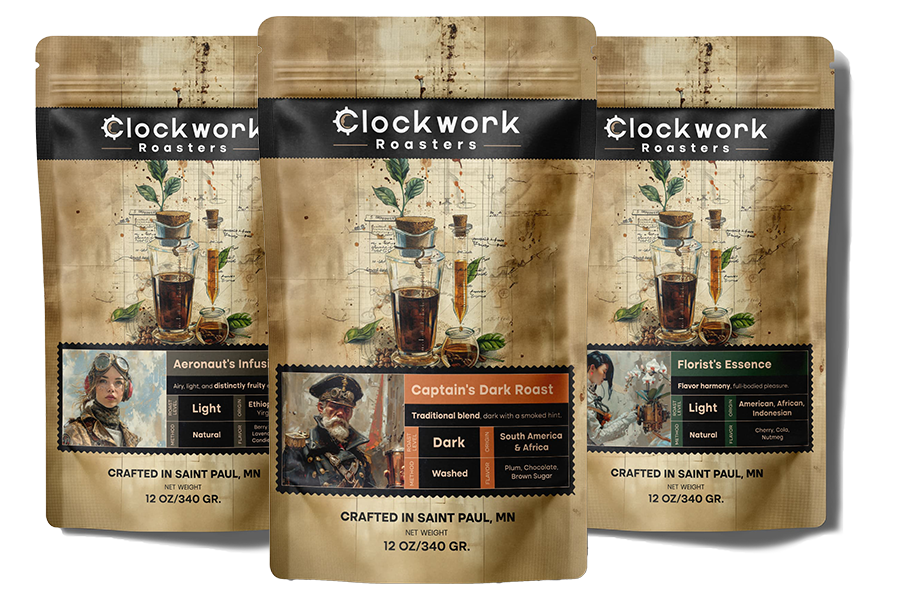
At Clockwork Roasters, batch inspection and roast development are built around this distinction: vivid flavor is welcome, but a cup still needs sweetness, aroma, and structure. First-class coffee should give you a clear destination before you begin adjusting the machinery.
A Fast Fix for a Sour Cup
When coffee tastes sour, resist the urge to change everything at once. Begin with the variable most likely to be responsible: grind finer. If that does not solve it, verify that your water is hot enough and that your brew time is not rushing. Then check your ratio and technique.
For espresso, a practical first move is to grind slightly finer and aim for a slower, more even flow. For a pour-over, use hotter water, a finer grind, and a careful bloom. For a drip machine, try a slightly finer grind and make sure the machine is fully heated. For a French press, extend the steep by 30 to 60 seconds.
Taste after every change. If sourness softens and sweetness emerges, you are moving in the right direction. If bitterness suddenly takes over, step back slightly. The ideal cup sits in the center: sweet, aromatic, structured, and true to the coffee's intended profile.
Your palate is the final instrument. A bright coffee can be brilliant, a dark coffee can be comforting, and a balanced brew can be both. Give the coffee enough heat, time, and even contact to tell its full story.
Leave a comment