
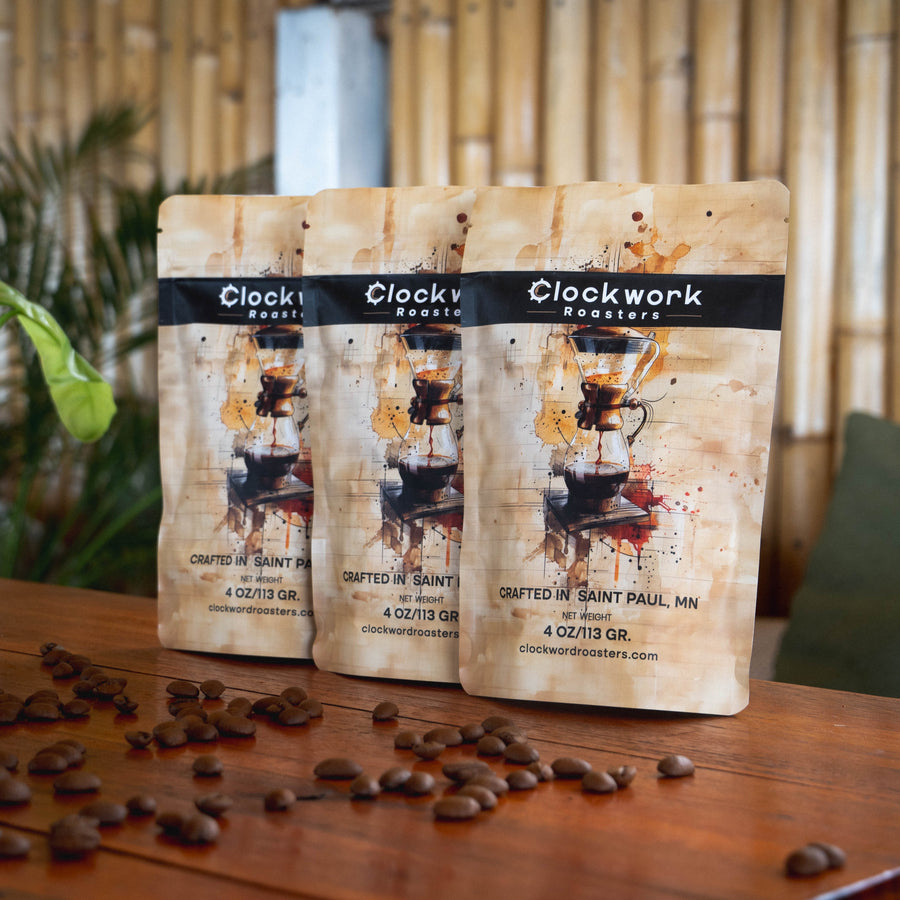




How Coffee Roasting Affects Flavor in Your Cup

A coffee bean begins as a dense, green seed with little resemblance to the aromatic brown bean in your grinder. Heat changes everything. Understanding how coffee roasting affects flavor explains why one coffee tastes like ripe berries and citrus while another delivers caramel, cocoa, toasted nuts, or a deep smoky finish. The origin matters. The processing method matters. But roasting is the precise moment when a coffee's potential becomes the cup in front of you.
For a specialty roaster, this is not simply a matter of making beans lighter or darker. Every batch requires measured heat, timing, airflow, and inspection. A few seconds can shift acidity, sweetness, body, and solubility. If it's not perfect, it doesn't ship.
How Coffee Roasting Affects Flavor, Aroma, and Body
Roasting triggers a cascade of chemical and physical changes inside the bean. As heat enters the coffee, moisture escapes, sugars begin to brown, acids transform, and hundreds of aromatic compounds develop. The bean expands, loses weight, changes color, and becomes increasingly brittle enough to grind and brew.
The central balancing act is simple to describe and difficult to execute: preserve the characteristics that make a coffee distinctive while developing enough sweetness and solubility for a satisfying brew. Push too little development and the cup can feel grassy, sharp, or underdeveloped. Push too far and origin character can disappear beneath charred, bitter flavors.
That is why roast level alone cannot tell the whole story. Two medium-roast coffees can taste completely different. One may present honey, red apple, and milk chocolate; another may lean toward roasted almond, brown sugar, and spice. Their differences can come from origin and processing, but they also reflect the roaster's decisions at each stage of the profile.
The drying phase sets the foundation
Early in the roast, the goal is to remove internal moisture evenly. Green coffee holds considerable water, and an uneven start can create uneven flavor later. Too much early heat may scorch the surface before the center develops. Too little momentum can leave the coffee flat or baked, with dull sweetness and muted aroma.
The best roasting profiles build energy with purpose. The coffee needs enough heat to progress cleanly, but not so much that the bean's surface races ahead of its interior. It is controlled engineering with a sensory payoff: clearer flavor, better sweetness, and more dependable brewing.
Browning builds sweetness and depth
As roasting continues, sugars and amino acids react through the Maillard process. This is part of what creates familiar notes such as caramel, toast, nuts, bread crust, and chocolate. It also creates much of coffee's inviting aroma.
Browning does not erase a coffee's natural flavor. At the right level, it can frame it. A fruit-forward natural coffee might retain strawberry or blueberry notes while gaining jammy sweetness. A washed coffee with citrus character might develop into a cup that suggests orange, cane sugar, and cocoa. The roast gives those ingredients structure.
First crack marks a major transition
Near the later portion of a roast, internal pressure causes the beans to crack audibly. Roasters call this first crack. It signals a key stage of development, when the coffee becomes more porous and increasingly soluble.
Coffee stopped shortly after first crack often keeps more of its origin-driven acidity and fruit character. Coffee developed longer after first crack gains more body, deeper sweetness, and darker roast notes. Neither approach is automatically better. It depends on the coffee itself and the experience the roaster intends to build.
Light, Medium, and Dark Roasts Are Different Tools
Roast labels are useful starting points, not fixed flavor guarantees. Think of light, medium, and dark as different ways to emphasize a coffee's available qualities.
Light roasts: clarity, fruit, and lively acidity
A well-executed light roast can spotlight floral aromas, juicy fruit, tea-like structure, and high-definition acidity. This style is especially compelling for coffees with expressive origins or fruit-forward natural processing. You may find notes that resemble lemon, peach, berries, jasmine, or tropical fruit.
The trade-off is that light-roasted coffee is less forgiving when brewed poorly. It can be harder to extract, especially with water that is too cool, a grind that is too coarse, or a rushed brew. When dialed in, however, it can deliver startling clarity and sweetness.
Medium roasts: balance without compromise
Medium roasting usually brings acidity, sweetness, and body into closer alignment. The cup often feels rounder than a light roast, with flavors such as caramel, chocolate, ripe fruit, toasted almond, and baking spice. For many daily coffee drinkers, this is the sweet spot.
A thoughtful medium roast works across brewing methods because it offers both character and flexibility. It can be bright enough for pour-over, rich enough for drip, and structured enough for espresso. That versatility is why balanced signature blends often live in the medium-roast range.
Dark roasts: depth, body, and traditional comfort
Dark roasting develops lower-acid, fuller-bodied coffee with notes that may suggest dark chocolate, molasses, roasted nuts, spice, or a pleasant bittersweet finish. Properly roasted dark coffee should taste intentional, not simply burnt.
The trade-off is reduced origin distinction. At a darker level, the roast itself becomes a stronger part of the flavor story. For drinkers who want a commanding cup with cream, milk, or a hearty breakfast, that can be exactly the point. Dark coffee also tends to extract more readily, which can make it approachable in many home brewers.
Roasting Changes More Than Taste
Flavor gets the attention, but roast level also affects how coffee behaves during grinding and brewing. Darker beans are more porous and generally easier to extract. Lighter beans are denser and may benefit from a finer grind, hotter water, or a longer contact time.
Freshly roasted coffee also releases carbon dioxide. This gas is a natural result of roasting and can influence extraction, particularly in espresso. Coffee often needs a short resting period after roasting to settle into its best performance. Too fresh, and excess gas can interfere with water flow and create uneven extraction. Too old, and the aromas that make a coffee exciting begin to fade.
This is why freshness is not a marketing detail. It is part of flavor control. Fresh coffee, stored well and brewed with a suitable recipe, gives the roast profile a fair chance to perform as designed.
Why Great Roasting Starts Before the Roaster
No roast profile can turn low-quality coffee into exceptional coffee. Roasting can reveal sweetness, refine texture, and build aroma, but it cannot invent the clean, complex character that was never present in the green coffee.
Specialty-grade, certified organic beans give the roasting process better raw material. Careful sourcing and batch inspection help ensure that the roaster is working with coffees capable of delivering distinct sensory results. Then the profile can be designed around what the bean does best: protect delicate florals, build syrupy fruit sweetness, support a chocolate-forward espresso, or create the deep comfort of a traditional dark roast.
At Clockwork Roasters, that means pairing established craft with coffee science rather than treating roasting as guesswork. The target is not a color on a scale. The target is a cup that is aromatic, balanced, and ready to earn a place in your daily ritual.
Choose a Roast for the Cup You Want
Start with the flavors you naturally reach for. If you enjoy bright fruit, floral tea, and a coffee that rewards careful brewing, choose a light roast. If you want a dependable all-purpose cup with sweetness, body, and broad appeal, medium roast is a strong first choice. If your ideal coffee is bold, cocoa-rich, and especially good with cream or milk, a dark roast may be your best match.
Your brewer should influence the decision, but it should not limit it. Pour-over can make light and medium roasts shine. Automatic drip brewers are excellent with balanced medium profiles. Espresso can be outstanding with nearly any roast level when the coffee and recipe are matched well, though many home baristas prefer medium or darker profiles for their body and sweetness. Turkish coffee calls for a very fine grind and benefits from a roast designed to remain flavorful at that intensity.
The most useful rule is to treat roast level as a flavor direction, not a quality ranking. A precise light roast and a precise dark roast can both be first-class coffee. Buy the flavor experience you want, brew it with attention, and let your next bag be guided by what you enjoyed most in the cup.

Leave a comment