



Best Espresso Beans Online for Better Shots

A great espresso has nowhere to hide. There is no oversized mug, flavored syrup, or extra water to cover a flat roast or stale bean. When you shop for the best espresso beans online, you are not simply choosing a dark bag with an Italian-sounding label. You are choosing how your first shot of the day will smell, pour, taste, and finish.
The right coffee should give you a repeatable starting point: a fragrant dry aroma, a steady extraction, a crema with some staying power, and a flavor that remains present when milk enters the picture. That does not mean every espresso bean should taste the same. It means the coffee has been roasted with purpose, handled with care, and described clearly enough for you to buy with confidence.
What Makes the Best Espresso Beans Online?
Despite what many bags suggest, "espresso beans" are not a separate species of coffee. Espresso is a brewing method. The best coffees for it are selected and roasted to perform under high pressure, where small changes in grind, dose, and timing can dramatically change the cup.
A dependable espresso coffee generally has enough sweetness and solubility to extract without a fight. It should offer structure - think chocolate, caramel, toasted nuts, brown sugar, ripe fruit, or a pleasant spice - without tipping into harsh bitterness. The goal is not to remove all acidity. A little brightness can make a shot lively. The question is whether that acidity feels integrated, not sour or thin.
Freshness matters just as much. Coffee needs time after roasting to release carbon dioxide, but old coffee loses aromatic intensity and becomes harder to dial in. Buying directly from a roaster gives you a better chance of receiving coffee that is recently roasted and carefully managed rather than a bag that has spent months in a warehouse or under grocery-store lights.
Organic certification is another worthwhile signal for shoppers who care about how coffee is grown. It does not automatically guarantee a flavor profile, but paired with specialty-grade selection and skilled roasting, it gives you a stronger foundation for a coffee ritual you can feel good about.
Choose a Profile Before You Choose a Roast Label
Roast labels are useful, but they are not a complete buying guide. One roaster's medium can be another roaster's dark. Flavor language tells you more about what will land in your cup.
For traditional, chocolate-forward espresso
Look for coffees described with cocoa, caramel, roasted nuts, molasses, baking spice, or a syrupy body. Medium-dark and dark blends often excel here, especially for cappuccinos, lattes, and americanos. Milk softens detail, so a coffee with deeper sweetness and a firm body will keep its character rather than disappearing.
This is the safest lane for someone who wants a familiar cafe-style shot. The trade-off is that very dark roasting can mute origin character and introduce smoky or carbon-like flavors. Dark does not have to mean burnt. A well-built dark roast should still taste sweet, clean, and intentional.
For balanced straight shots
A medium espresso blend is often the sweet spot. It can combine chocolate and caramel comfort with a little fruit, floral lift, or citrus-like sparkle. These coffees tend to be flexible enough for straight espresso in the morning and milk drinks later in the day.
Blends are not a compromise. They are engineered for consistency. Combining coffees can create more body, a wider sweetness range, and a more stable extraction than a single origin can provide on its own. For a home barista who wants a reliable daily driver, that precision has real value.
For fruit-forward espresso
Light roasts and naturally processed coffees can produce spectacular espresso: jammy berry, stone fruit, tropical sweetness, or candy-like florals. They are also less forgiving. Expect to adjust your grind, temperature, ratio, or shot time more carefully than you would with a classic medium-dark blend.
If you enjoy tasting coffee as a distinct agricultural product, this category is worth exploring. Start with a slightly longer ratio, such as 18 grams in and 40 grams out, rather than forcing a traditional short shot. The result may be brighter, but brightness with sweetness is not the same as sourness.
Read the Product Details Like a Barista
Online coffee shopping works best when you ignore vague claims and look for useful specifics. A strong product page should tell you whether the coffee is a blend or single origin, its roast level, likely flavor notes, available bag sizes, and whether it is offered whole bean or ground.
Whole bean is the clear choice for espresso if you own a capable burr grinder. Espresso requires a very fine, highly consistent grind, and coffee begins losing aroma rapidly once ground. Buying whole bean lets you make small adjustments as the coffee ages and as humidity changes in your kitchen.
Pre-ground coffee can still be practical when convenience is the priority, but make sure the grind option is actually intended for espresso. A generic "fine" grind can be too coarse for a pressurized portafilter and too fine for another setup. If you use a superautomatic machine, check its manufacturer guidance before ordering. Many machines are designed for whole beans and can struggle with very oily, extremely dark roasts.
Bag size deserves an honest look, too. A 12-ounce bag makes about 18 to 20 double shots, depending on your dose. A two-pound bag can offer better value for a household that goes through coffee quickly, but only if you can finish it while the flavor is still lively. For one person pulling a few shots each week, smaller bags or a subscription cadence that matches real consumption will deliver better results than chasing the lowest price per ounce.
Fresh Coffee Still Needs a Good Setup
Even exceptional beans cannot compensate for a dull grinder or an inconsistent routine. Before blaming the coffee, make sure your machine is clean, your basket is dry, and your scale is nearby. Start with the recipe recommended by your equipment or roaster, then change one variable at a time.
If a shot runs fast and tastes sharp, grind finer. If it crawls out and tastes bitter or dry, grind coarser. If it tastes both sour and bitter, your extraction may be uneven. Check your distribution, tamp, and grinder consistency before making a dramatic adjustment.
Keep beans in their original resealable bag if it has a one-way valve, then place the bag in a cool, dark cabinet. Avoid the refrigerator. Coffee absorbs odors and condensation can do real damage. Freezing can work for long-term storage, but only when beans are sealed in small, airtight portions that will not be repeatedly opened.
Build a Better Online Coffee Routine
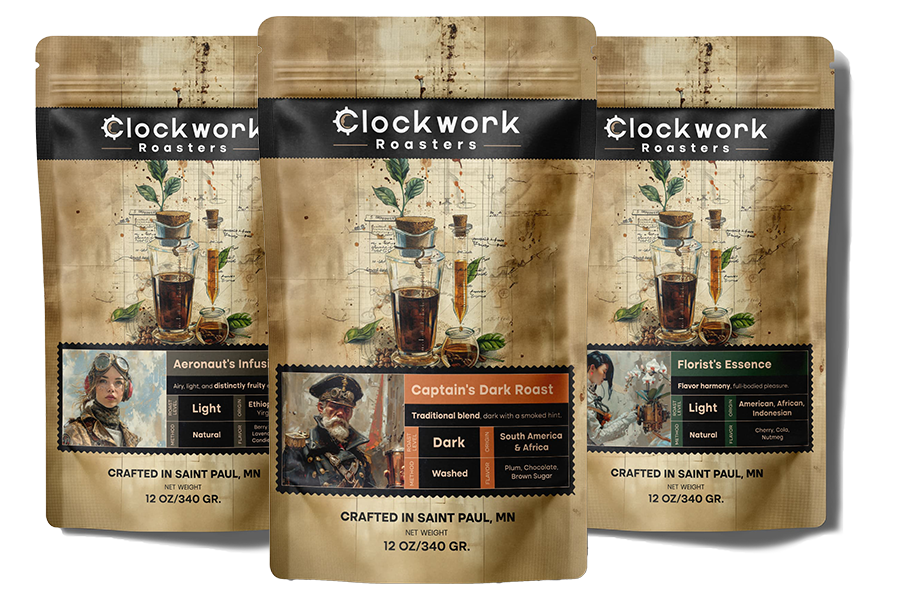
The best online purchase is not necessarily the most expensive bag or the most exotic origin. It is the coffee you can brew well, enjoy consistently, and reorder without hesitation. That is why a starter pack can be more useful than a blind commitment to a large bag. Try a balanced blend, a traditional dark profile, and a brighter option side by side. Your palate will tell you more than a roast label ever can.
Subscriptions are equally useful when they are built around your actual pace. Fresh coffee arriving before you run out is convenient; a cabinet full of coffee you cannot finish is not. Look for flexibility in delivery timing, easy adjustments, and a satisfaction policy that treats the first purchase as a conversation rather than a gamble.
Clockwork Roasters approaches that decision with certified organic, specialty-grade coffees, tightly managed roasting, and a first-purchase promise designed to remove the risk: if the selection is not right, a replacement comes first, with a refund option after that. That is how coffee buying should work - exacting standards on the roasting side, and a clear path forward on yours.
Your ideal espresso may be deep and chocolatey, bright and fruit-led, or balanced enough to do both straight shots and Saturday-morning lattes. Buy the coffee whose flavor direction fits your ritual, give it a thoughtful dial-in, and let the next bag be an informed choice rather than a guess.
Leave a comment